TEL: +86-573-87471884 / 87471697
FAX: +86-573-87471537
Address: No. 205 Xinjiang Road Changan Haining, Zhejiang, China
E-mail: howardshen@263.net, goldcitylock@hotmail.com
Welcome to our website!

 Language

Cargo theft is not limited to trucks in transit. Goods also sit at loading bays, staging areas, storage cages, gates, and rolling shutters.
CargoNet recorded 767 supply-chain crime events across the United States and Canada in Q1 2026. Of those, 596 were confirmed cargo theft reports, with estimated losses of $131.58 million. In Europe, warehouses accounted for 33% of recorded theft locations in the BSI Consulting and TT Club 2025 Cargo Theft Report.
A mechanical lock will not stop carrier impersonation or fraudulent pickup instructions. It does control physical access at fixed sites. For importers, distributors, contractors, and warehouse operators, the task is to source wholesale padlocks that fit the actual locking point and work within a wider security plan.
A common purchasing mistake is approving a padlock from a catalog photo. The body looks suitable, but the shackle will not pass through the hasp. Or it fits, yet leaves too much exposed metal.
Record the hasp-hole diameter, chain opening, shackle clearance, and space around the lock body. Take front and side photos. Put a ruler in one image if the fitting is recessed or close to a wall.
Daily use matters too. A dock door opened several times per shift needs convenient key access. Staff wearing gloves will notice an awkward key angle quickly.
Group access points before asking an industrial padlock supplier for a quotation:
· Loading-bay and dock-door hasps
· Perimeter gates and chains
· Internal storage cages
· Tool rooms and restricted inventory areas
· Rolling shutters
Locking point | Main buying concern | Product direction | Information to confirm |
Loading-bay hasp | Frequent access | Steel-ball-locking padlock | Hasp hole, clearance, and key angle |
Storage cage | Shackle exposure | Half-closed-shackle padlock | Space around the hasp |
Large gate | Body and shackle size | Rectangular brass padlock | Chain or hasp measurements |
Rolling shutter | Fitting compatibility | Bell padlock system | Bracket, anchor, and floor position |
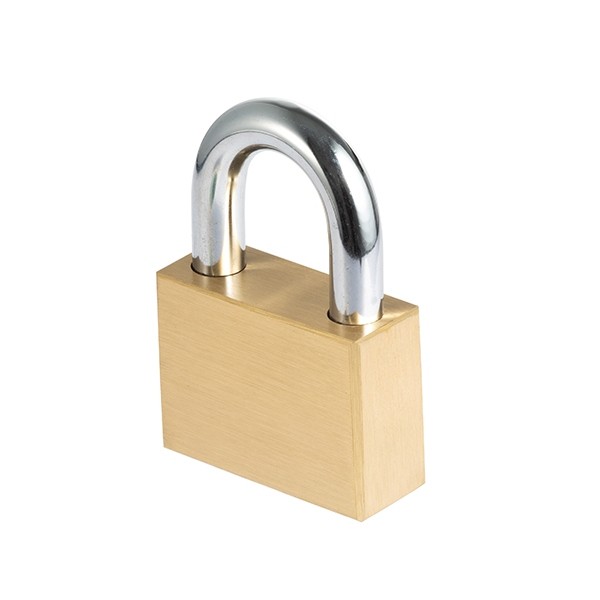
GOLD CITY lists square steel-ball-locking brass padlocks within its steel ball locking disc padlock range, including a separate master-key version. Buyers should confirm the required body size, shackle dimensions, and keying arrangement against the current product specification before sample approval.
These commercial padlocks may suit compatible gates, cages, and warehouse hasps. The largest model is not automatically the right one. Shackle diameter, internal clearance, and key position still decide whether the lock works on-site.
Set the key plan early. Keyed-alike groups simplify daily work, while a master-key arrangement may support supervisors across selected zones.
A half-closed-shackle design places more of the shackle behind the lock body and nearby hardware. GOLD CITY’s half-closed-shackle brass padlocks are listed in 45 mm and 55 mm sizes.
This shape may suit selected gates and cages where lower shackle exposure is preferred. Wide, offset, or poorly aligned hasps may not leave enough room. Test the sample on the real fitting before mass production.
The GOLD CITY solid brass rectangular padlock series, models 9850 through 9890, includes 50 mm, 60 mm, 70 mm, 75 mm, and 90 mm options.
For distributors building a wholesale padlocks range, the series provides several commercial sizes rather than one generic “large lock.” Bigger hardware does not correct a bad measurement; body and shackle geometry must still match the hasp.
Rolling shutters usually need a fitted locking system, not a standard U-shackle padlock selected on its own.
GOLD CITY lists a bell padlock for rolling shutters as Model 2600. The shutter bracket, anchoring point, ground fitting, floor condition, and full door travel all affect installation.
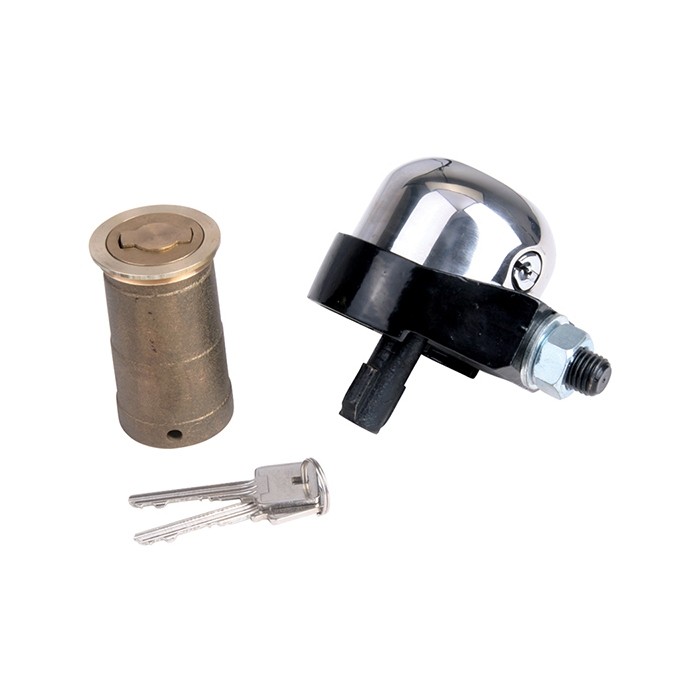
Send site photos or drawings to the brass padlock manufacturer before ordering. That step can prevent a costly mismatch on-site.
“Please quote secure warehouse locks” is not enough. A clear RFQ lets the factory recommend models, calculate packing, prepare samples, and flag fitting problems before production.
For broader size, shackle, keying, and application guidance, buyers can review GOLD CITY’s brass padlock selection guide for industrial and wholesale buyers.
Include:
· Locking-point type, photos, and measurements
· Indoor, covered-outdoor, or exposed placement
· Body, shackle, and key-turning clearance
· Quantity by model or application
· Requested test records or technical documents
Avoid relying only on labels such as “heavy duty” or “high security.” Defined dimensions, construction, sample approval, and agreed testing give buyers a clearer basis for comparing quotations.
State whether the project needs keyed-different, keyed-alike, or master-key padlocks. Add packaging, labels, carton markings, destination market, sample quantity, and delivery schedule.
A professional industrial padlock supplier should confirm the model code, dimensions, keying plan, packaging, and approved sample before production. The same records make repeat orders easier.
A sample that works on a desk may behave differently on an old gate, recessed hasp, or uneven shutter floor.
Install the sample on the real fitting and check:
· Key insertion and turning space
· Contact between the lock body and door
· Unnecessary shackle clearance
· Locking and unlocking consistency
· Operation while wearing work gloves
· Full shutter movement, where applicable
For rolling shutters, open and close the door through its full cycle. The lock and fitting should not interfere with normal operation.
Record the approved model, dimensions, keying group, packaging, labels, and carton data. Keep photos and a signed specification sheet.
After a staff change, a repeat order should not depend on an old email or somebody’s memory.
Warehouse padlocks control physical access. They do not verify drivers or replace surveillance.
A practical warehouse security plan combines fitted locks with controlled keys, lighting, cameras, alarms, visitor procedures, inventory checks, and incident reporting. Lost keys need a documented response, especially with keyed-alike or master-key systems.
The lock matters. So does the process around it.
Warehouse padlock sourcing should begin with the real locking point, not a broad product label. Hasp dimensions, shackle exposure, key access, environment, keying, packaging, and repeat-order needs shape the final specification.
GOLD CITY manufactures steel-ball-locking brass padlocks, half-closed-shackle models, rectangular padlocks, and rolling-shutter locking products for B2B channels. Importers, distributors, contractors, and facility buyers can send GOLD CITY their site photos and RFQ details to request a model recommendation, samples, packing information, and a commercial quotation.
A: Include application photos, fitting dimensions, available clearance, environment, quantity, keying, packaging, destination market, sample needs, and delivery target.
A: Yes. They can reduce the number of keys carried by one team. Divide access zones carefully and decide whether supervisors also need a master-key arrangement.
A: A purpose-designed bell padlock system may suit the application when the bracket, anchor, ground fitting, and installation space match the site. Review site photos or drawings before ordering.
A: Test fit, key access, locking consistency, shackle clearance, labels, packaging, and the agreed keying arrangement on the actual installation. Keep the approved sample as a production reference.
A: Brass bodies can suit many outdoor applications, but buyers must also check shackle material and finish, exposure level, drainage, maintenance, and project-specific testing requirements.
TEL: +86-573-87471884 / 87471697
FAX: +86-573-87471537
Address: No. 205 Xinjiang Road Changan Haining, Zhejiang, China
E-mail: howardshen@263.net, goldcitylock@hotmail.com
 浙公网安备33048102250808号