TEL: +86-573-87471884 / 87471697
FAX: +86-573-87471537
Address: No. 205 Xinjiang Road Changan Haining, Zhejiang, China
E-mail: howardshen@263.net, goldcitylock@hotmail.com
Welcome to our website!

 Language

A padlock quotation may look complete when it covers the model, quantity, unit price, and “standard export packing.” For an EU-bound order, that is no longer enough. Retail packs, cartons, labels, and transport materials can all affect the packaging file that follows the product into the market.
Regulation (EU) 2025/40 on packaging and packaging waste (PPWR) generally applies from 12 August 2026. Several detailed requirements follow later dates, so importers do not need to redesign every pack at once. The immediate priority is to know what packaging is used for each SKU, keep artwork and packing versions under control, and clarify who handles market-specific labelling and EPR work.
That groundwork also makes supplier comparisons, artwork approval, and repeat orders easier.
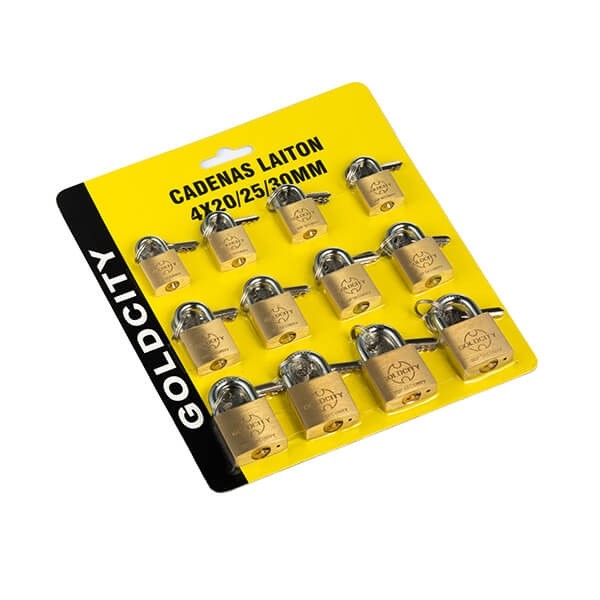
PPWR separates packaging by function. In a typical padlock order, the pack that reaches the customer is sales packaging; an inner carton grouping several units is grouped packaging; master cartons, pallet wrap, and straps may form part of transport packaging.
For purchasing teams, that distinction is useful beyond legal terminology. Each layer has its own material, dimensions, weight, artwork, and handling role. “Export carton” leaves too much open when an EPR team, customer, or internal compliance colleague asks what is actually being placed on the market.
A workable SKU record links the product to the packaging format, main material, approximate weight, dimensions, carton quantity, artwork version, destination market, and approval date.
Packaging data is easiest to collect while the quotation, sample, and artwork are still open. Once production is finished, even a simple question about blister material or carton weight can turn into a search across old specifications and supplier emails.
Record the layers actually used in the order rather than treating everything as one pack. A blister card may stay with the consumer, an inner carton may group several locks, and a master carton may only exist for transport.
This separation also makes changes easier to judge. A lighter retail pack may be possible without touching the transport carton, while a carton reduction that works for one SKU may create too much movement around another.
The record needs enough detail to identify each component later. Typical items include paperboard, plastic blister material, labels, inserts, polybags, stretch film, straps, and pallets.
Approximate component weights are useful for packaging reporting and EPR work. The exact responsibility depends on the economic operator that qualifies as the producer in the relevant Member State.
Private-label packaging often changes without changing the lock itself. A new barcode, language panel, logo, pack size, or display format can create another packaging version.
The artwork file, packing revision, approved sample, carton marks, and purchase order work best under one version reference. That keeps a repeat order from combining an old retail design with new packing instructions.
For buyers reviewing the lock specification at the same time, the GOLD CITY brass padlock selection guide for industrial and wholesale buyers covers size, shackle fit, key systems, packing style, and carton data before quotation.
Packaging minimisation matters more under PPWR, but the pack still has to survive normal handling. A smaller pack only helps if the locks arrive in saleable condition, with keys secure and printed packaging intact.
From 12 February 2028, sales packaging has to reduce empty space to the minimum necessary for packaging functionality, including product protection. For grouped, transport, and e-commerce packaging, the 50% maximum empty-space requirement applies from 1 January 2030 or three years after the relevant implementing acts enter into force, whichever is later.
A hardware-store order and an industrial distribution order may use the same type of brass padlock but need different sales packaging.
GOLD CITY displays brass padlock skin-card and double-blister packing options for retail-oriented orders. These formats give buyers practical reference points when discussing display, artwork space, pack size, and sales-channel requirements. Industrial distribution may call for a simpler format where retail presentation adds little value.
The sales channel drives the packaging choice. That keeps “less packaging” from turning into “wrong packaging.”
Master cartons affect freight, handling, stacking, and warehouse space. One carton size across several lock models can simplify purchasing, but the saving disappears if smaller models need large amounts of filler. Model-level carton data also matters. For example, the GOLD CITY Marine Type Brass Padlock with Stainless Steel Shackle lists carton quantity, carton dimensions, net weight, and gross weight separately across its 9230–9260 models.
Carton quantity, dimensions, gross weight, marks, and any pallet configuration belong in the same commercial approval as the sales pack.
Some clearance is there for a reason. Locks can rub against one another, keys can become detached, and printed packs can deform when a carton is too tight or poorly arranged.
A packing sample handled like a normal shipment is more useful than judging the layout from artwork alone. The aim is to remove space and material that add no protection or handling value.
The new harmonised material-composition label is not an August 2026 requirement. It applies from 12 August 2028 or 24 months after the relevant implementing acts enter into force, whichever is later. The harmonised label is based on pictograms and is designed to be easily understandable to consumers. Other product or market-specific information may carry separate language requirements.
EPR needs a separate check. An importer is not automatically the producer in every transaction. Under PPWR, the producer may be a manufacturer, importer, or distributor depending on who first makes the packaging or packaged product available in the relevant Member State and how the goods reach that market.
Before artwork is released, the commercial file needs clear ownership of four points:
· Artwork approval
· Market languages and marks
· The relevant EPR role
· Packaging and registration records
The factory can follow an approved brief and provide agreed order information. The market-specific legal decision remains with the responsible economic operator and its compliance advisers.
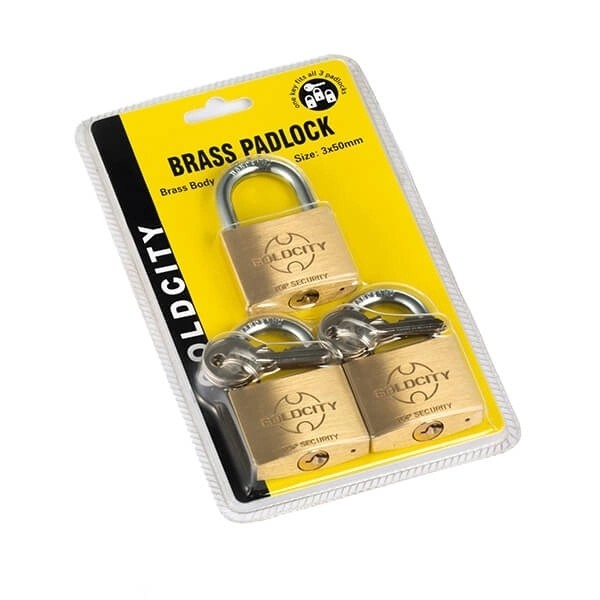
Packaging belongs in the RFQ from the first quotation. Otherwise, two suppliers can appear to be quoting the same padlock while one price includes retail cards, barcodes, and custom artwork and the other covers plain bulk packing.
Packaging area | Information to define | Supplier information to request |
Sales pack | Blister, card, box, sleeve, or bulk format | Material, dimensions, artwork area, pack drawing |
Grouped pack | Inner quantity and material | Configuration by SKU |
Master carton | Units, dimensions, carton marks | Net/gross weight and carton data |
Labels | Barcode, languages, market marks | Printing capability and buyer-supplied files |
Transport pack | Wrap, straps, pallets | Materials and shipment configuration |
For a GOLD CITY inquiry, the padlock model, quantity, destination market, sales channel, and preferred packing format give the factory a workable starting point. Artwork needs, carton data, sample timing, and delivery requirements can then stay in the same RFQ rather than being handled in separate email threads.
Before artwork or production approval, confirm that:
· Each SKU has one defined packaging configuration.
· Material, approximate weight, dimensions, and carton data are recorded.
· Artwork, labels, carton marks, and packing instructions share the same revision.
· The responsible EU operator has confirmed the applicable EPR, language, and market requirements.
· The approved packing sample and final records are stored with the purchase order.
Once finished goods are waiting for shipment, packaging changes become slower and more expensive. The useful control point is before production, not at the loading date.
PPWR brings packaging decisions closer to the start of the padlock sourcing process. For EU importers, a broad statement such as “PPWR-compliant packaging” is less useful than a clear SKU-level file showing what packaging is used, which version is approved, and who owns the market-specific responsibilities.
That same discipline improves commercial work. Supplier quotations become easier to compare, repeat orders are less likely to drift from the approved pack, and carton planning starts with real data instead of assumptions.
Importers and private-label buyers can contact GOLD CITY with the padlock model, quantity, destination market, preferred packing format, artwork requirements, and target delivery date to discuss samples, MOQ, carton data, lead time, and quotation details.
A: PPWR covers packaging and packaging waste, not the padlock locking mechanism itself. Product safety, chemical, customs, and other market requirements may still apply separately to the finished product.
A: The harmonised material-composition label applies from 12 August 2028 or 24 months after the relevant implementing acts enter into force, whichever is later.
A: The core information includes the pack format, component materials, approximate weights, dimensions, units per carton, gross weight, carton marks, artwork requirements, and the packing revision linked to each SKU.
A: Responsibility depends on which economic operator qualifies as the producer for the specific market arrangement. That may be a manufacturer, importer, or distributor, depending on who first makes the packaging or packaged product available in the relevant Member State.
A: No. GOLD CITY can work to an agreed product and packaging brief and provide available order information. The responsible EU economic operator determines the applicable PPWR, EPR, language, and national requirements for the destination market.
TEL: +86-573-87471884 / 87471697
FAX: +86-573-87471537
Address: No. 205 Xinjiang Road Changan Haining, Zhejiang, China
E-mail: howardshen@263.net, goldcitylock@hotmail.com
 浙公网安备33048102250808号