TEL: +86-573-87471884 / 87471697
FAX: +86-573-87471537
Address: No. 205 Xinjiang Road Changan Haining, Zhejiang, China
E-mail: howardshen@263.net, goldcitylock@hotmail.com
Welcome to our website!

 Language

If you need to replace a padlock or write a sourcing request, measure more than body width. The reliable method records body width, body height, body thickness, shackle diameter, horizontal clearance and vertical clearance.
Keep the lock closed, use millimetres, and measure the hasp, chain or staple. This method applies to homeowners, maintenance teams, importers and distributors who need a replacement that fits the existing locking point rather than one that only looks similar.
The key decision is fit before security level. A body can be the right nominal size while its shackle is too thick for the hole, too short to pass over the latch, or too narrow to sit correctly.
Record each dimension in one worksheet, then give the figures, use case, exposure and keying requirement to a supplier. That turns a vague request for a 50 mm padlock into a reproducible specification.
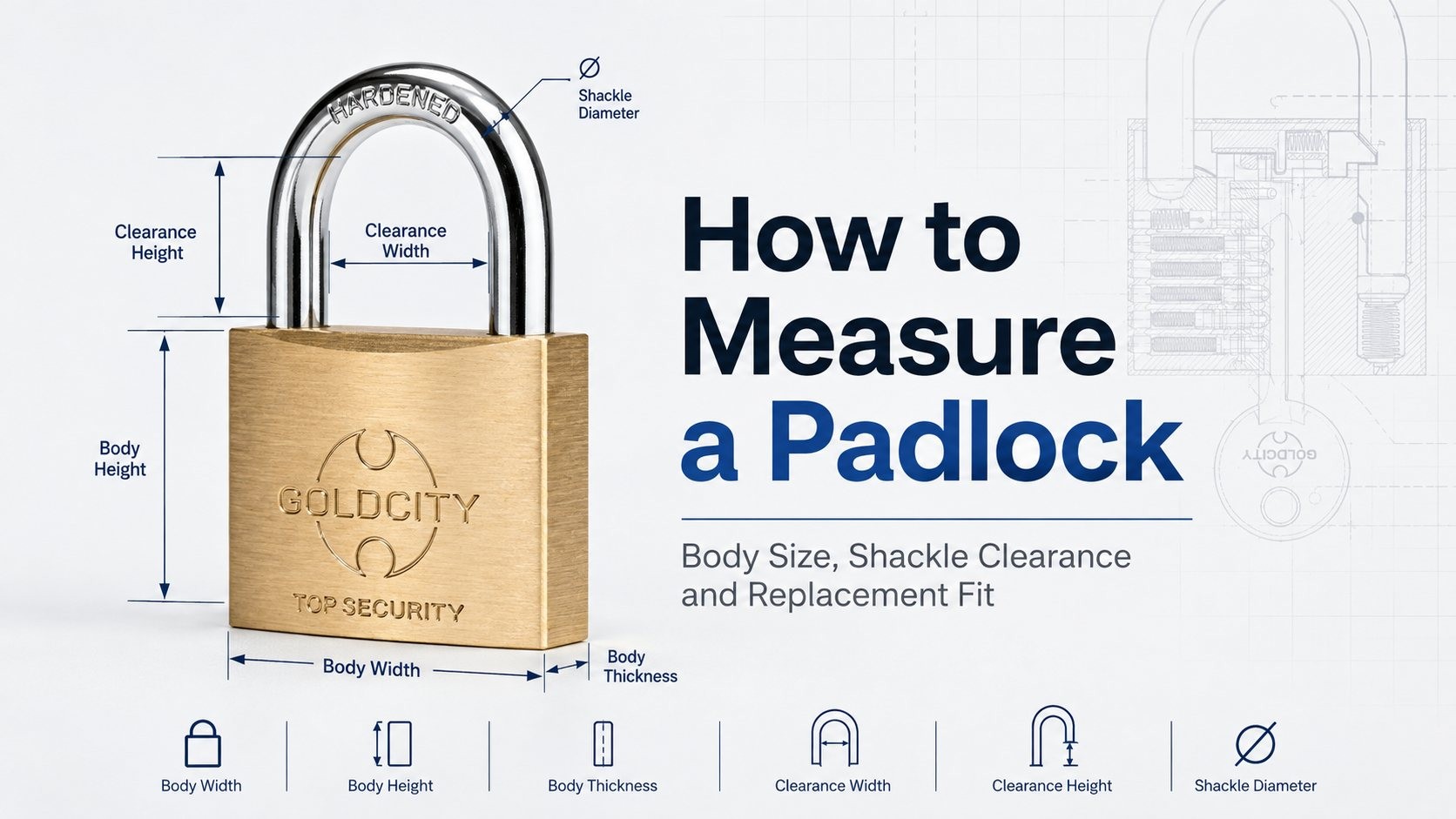
In most catalogues, the padlock size refers to the body width, measured across the widest front face. It does not automatically describe the overall height, body depth or usable shackle opening.
Two locks with the same body width can have different shackle diameters and clearances, so body width is an identifier, not a complete fit check.
Use a ruler for a quick field check and a digital caliper when a replacement must match a restricted opening. Measure a clean, undamaged area and note whether the value is taken from a finished coating or from a machined reference surface.
For procurement, record the unit as mm and keep a photograph or sketch only as supporting evidence; the numeric worksheet remains the controlling specification.
A complete padlock measurement set has six values. The body dimensions describe the lock case; the shackle dimensions describe whether it can pass through and sit on the locking point.
Measuring all six prevents a common mistake: ordering by body width while overlooking the clearance needed by the door, gate, chain or hasp.
Measurement | Where to measure | Why it matters |
Body width | Across the widest front face | Common size identifier and space around the locking point |
Body height | Bottom of body to top edge, excluding shackle | Checks overall case height and replacement clearance |
Body thickness | Front face to back face | Determines depth in a hasp, enclosure or bracket |
Shackle diameter | Thickness of the U-shaped bar | Must pass through the hole and resist the expected attack |
Clearance width | Inside distance between shackle legs | Controls fit around a staple, chain link or hasp |
Clearance height | Top of body to inside of shackle arch | Controls whether the shackle can pass over the latch |
Start with the body because it provides the familiar size label, but do not stop there. Place the closed lock on a flat surface.
Measure width from the left edge to the right edge, height from the bottom of the body to the shoulder below the shackle, and thickness from front to back.
Write each value separately. If the body has a rubber or plastic cover, state that the measurement includes the cover because it may affect a tight retrofit.
Measure the shackle diameter at the straight section of the bar, not across the outside of the U. A caliper gives the most repeatable reading.
Then measure horizontal clearance between the inside faces of the two legs and vertical clearance from the top of the body to the inside crown. These internal values tell you whether the lock can physically reach the staple or chain.
Measure the receiving hardware too. Note the hole diameter, the thickness of the hasp or chain, and the distance the shackle must travel before the body can hang freely.
Leave enough working room for the key and for hand access. A replacement can match every catalogue dimension yet fail because the hasp is recessed, the chain link is twisted, or the latch needs a longer shackle.
Convert the measurements into a short replacement brief: application, body width × height × thickness, shackle diameter, clearance width × height, receiving-hole size, indoor or outdoor exposure, and keying requirement.
Add a tolerance note when the opening is tight. If the original lock is unavailable, measure the hasp and the space around it, then state the minimum clearance the new lock must provide.
1. Measure the existing lock and receiving hardware in the same unit.
2. Record nominal values and the tightest opening, not only a rounded estimate.
3. State whether the lock must be keyed different, keyed alike or supplied with another access plan.
4. Send the worksheet with quantity, destination market and packing needs when requesting samples or a quote.
5. Approve a physical sample on the actual or representative installation before a repeat order.
A supplier table may list body sizes such as 20, 30, 40, 50, 60 or 70 mm. Treat those values as a starting point, then check the drawing or dimension columns for body height, shackle diameter and clearances.
The same nominal size can be offered in standard- and long-shackle versions, changing the fit without changing the body-width label.
When a replacement needs a documented brass-body reference, use the GOLD CITY heavy-duty brass padlock range as a shortlist.
Models HL400A-HL407A span 15-70 mm body sizes and publish body, shackle and carton fields. Match those figures to the measured hasp before sampling; the table narrows the choice, while the installation confirms it.
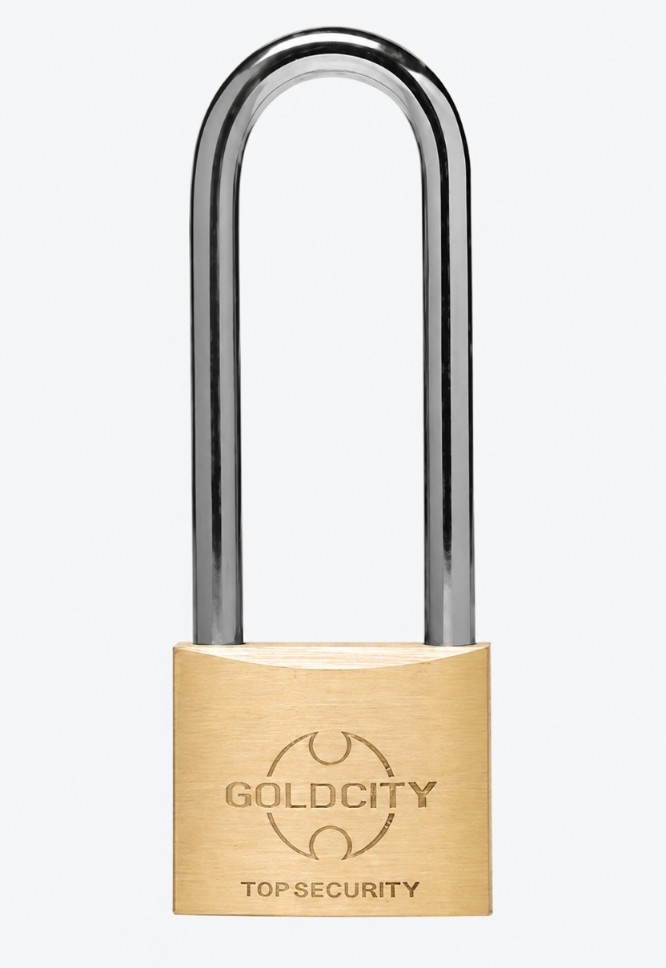
If the receiver is a gate, chain or storage cage, a long-shackle series provides a clearance-led option.
The useful test is reach, not a blanket claim of greater strength: confirm that the opening passes the hardware, leaves hand room and still works with the chosen key plan before volume production.
The first error is measuring overall height while calling it body height. Keep the shackle out of the body measurement. The second is measuring the outside of the shackle instead of its diameter or internal clearance. The third is rounding a tight opening to the nearest five or ten millimetres. Record the actual reading and identify the dimension that limits the fit.
A body-size match is insufficient when the lock sits in a recessed hasp, passes through a heavy chain, or must clear a latch with limited hand room.
A GOLD CITY long-shackle option can be checked for that reach. Security depends on the complete locking point: the hasp, anchor, chain and door may be weaker than the padlock.
For multi-door sites, record keying separately from geometry. Keyed different keeps doors separated; keyed alike can simplify access for one authorised team. Neither option fixes a poor mechanical fit.
Include both the measurement worksheet and the access plan in the same purchase reference so a reorder does not reproduce the wrong dimensions or key arrangement.
Send the supplier your six measurements, a description of the receiving hardware, the operating environment, estimated quantity and target market. Ask for a dimension drawing and a sample that represents production.
Check the sample on the actual or representative installation with the lock closed and open. Confirm that the approved body, shackle, keying and packing references stay attached to the purchase order.
A repeat-order supplier matters when the approved dimensions need to remain stable. Established in 1975, GOLD CITY employs over 200 people, possesses comprehensive testing equipment, and has an annual production capacity of more than 10 million padlocks; the company is certified under the ISO9001:2015 quality management system.
These facts support a traceable sample-to-bulk discussion; they do not replace the buyer’s fit test.
The safest answer to how to measure a padlock is a six-value worksheet, not a single body-width number. Measure body width, height and thickness; then measure shackle diameter, clearance width and clearance height.
Check the receiving hardware, keying plan, environment and packing requirements before approving a replacement or wholesale order. This process reduces fit failures, emergency substitutions and avoidable repeat-order mistakes.
For a GOLD CITY quotation, send the measured values, application, quantity, destination market, keying preference and packing format to GOLD CITY. The factory can use that brief to discuss suitable models and sampling.
A: Measure the body width across its widest front face, then record body height, body thickness, shackle diameter, clearance width and clearance height. Use millimetres and measure the hasp or chain as well.
A: Usually no. The nominal padlock size commonly refers to body width. Overall height includes the shackle, while body height stops at the shoulder below the shackle.
A: Check diameter first for hole fit, then clearance width and height for reach. The limiting dimension depends on the hasp, chain, latch and available hand space.
A: Use the unit used by the supplier and destination market. Millimetres are practical for a sourcing worksheet; if you convert, keep the original reading so rounding does not hide a tight fit.
TEL: +86-573-87471884 / 87471697
FAX: +86-573-87471537
Address: No. 205 Xinjiang Road Changan Haining, Zhejiang, China
E-mail: howardshen@263.net, goldcitylock@hotmail.com
 浙公网安备33048102250808号